How to get rid of pigeons on your balcony, and keep them off
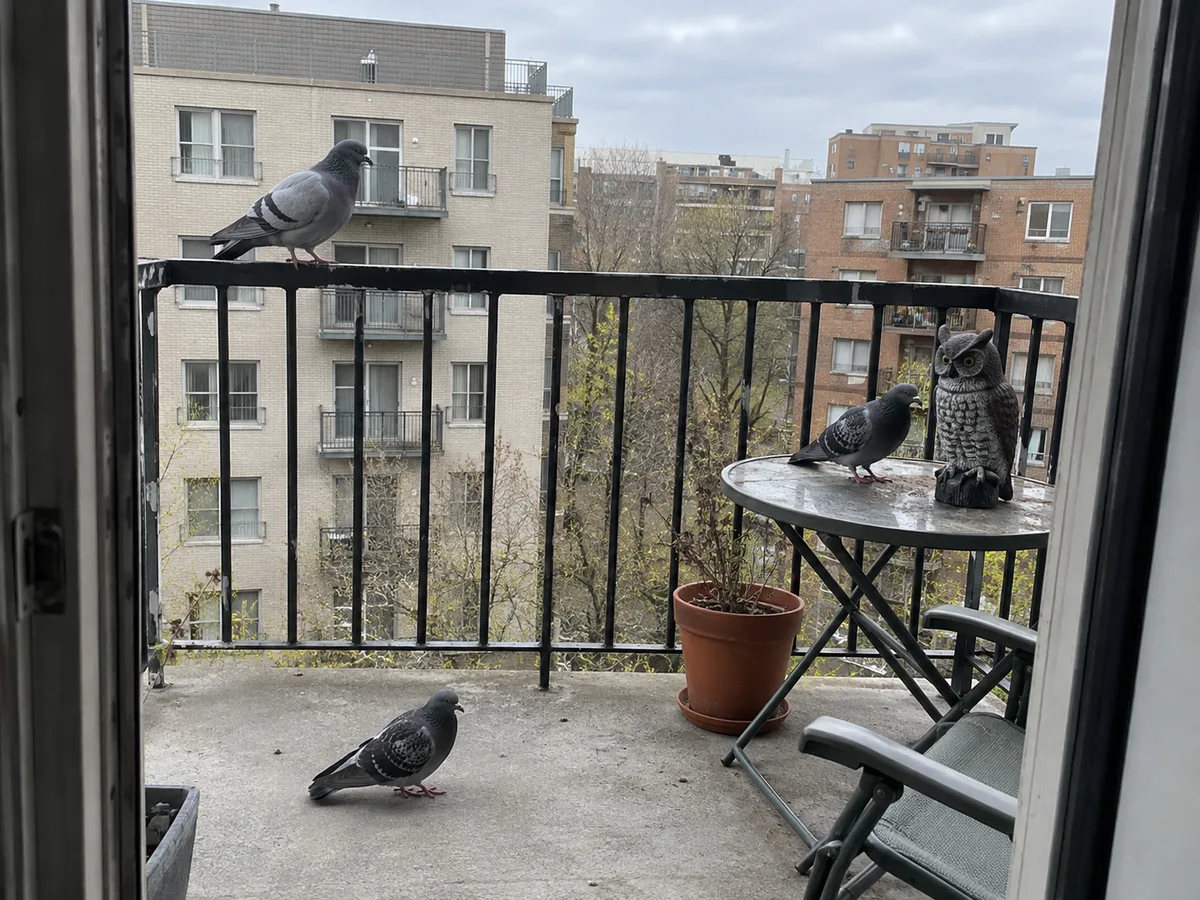
First, make sure it’s a pigeon
Pigeons aren’t protected in Canada, but most other birds on your railing are, along with their nests. A quick look before you act saves trouble.

Why your balcony?
Cities give pigeons food and shelter all year, and a balcony with crumbs, a flat railing and a quiet corner has all of it. Act early: a pair can raise about a dozen young a year.
Find the spot they actually use
Do they land on the railing, rest above the door or head behind a storage box? Watch for a day or two before changing everything. A fix aimed at the rail does nothing for a sheltered corner on the floor.
1. No snacks
Sweep up crumbs, spilled bird seed and pet food, and empty standing water. If a neighbour feeds the birds, a friendly chat or a word with building management helps. In Montreal, feeding wild animals, pigeons included, is prohibited.
2. No landing spots
Pigeons need a flat place to land. A thin wire stretched a few centimetres above the railing takes that away. It’s nearly invisible and costs little. On ledges and flat rail tops, a sloped cover does the same: Toronto suggests metal flashing set at a 45-degree angle. Ask your building before attaching anything to shared surfaces.
Fitting bird wire, step by step
- Measure the railing or ledge where pigeons land.
- Clamp or glue a post at each end, and more in between if the kit calls for it. No drilling needed on most railings.
- Stretch the wire between the posts, using the springs to keep it taut, at the height the kit recommends.
- On a wide ledge, add a second wire so there’s nowhere to stand between them.
- Check it after a windy week; a sagging wire becomes a perch.
3. No nesting corners
Clear out empty pots, boxes and clutter: those corners are exactly where a pigeon wants to nest. Check first that nothing is already nesting there.
Already nesting?
Tell your landlord or property management: the nest may be their call, and the City of Toronto won’t remove pigeons from private property. Twigs with no eggs can go straight away, before the pair settles in. If there are eggs or chicks, confirm they’re pigeons, then either wait until the nest is empty and clean it out, or call a pest control company. Once it’s gone, block the spot so they can’t rebuild.

4. Netting, for the tough cases
If birds keep getting in, netting closes the balcony off completely. It has to be tight, because loose netting can trap birds. For big balconies, get building approval and have it installed by a professional. Want to keep the balcony open? Then rely on steps 1 to 3. Birds can still fly in, so give them no reason to stay and watch whether they come back.
Do fake owls, foil and spinners work?
For a few days, often yes. Then the owl never moves, nothing bad happens, and the pigeons sit next to it. Natural Resources Wales notes that birds get used to visual scare devices, and that changing and combining methods helps. Reflective tape, foil, old CDs and spinners stop working the same way. Health Canada also notes that pigeons get used to scaring devices such as noises and flashing lights.
If you already own one, move it every few days and keep steps 1 to 3 in place. One quiet morning proves little: weather, food elsewhere and your own presence change visits too. Watch at the same time over several days and count landings. What you want is fewer visits over time.
What to skip
- Glue and sticky gels. They injure birds and trap other small animals.
- Poison. Dangerous for pets and other wildlife.
- Removing a nest without checking. For most species, a nest with eggs or chicks is protected. Make sure it’s a pigeon’s, or wait until it’s empty.
Cleaning up droppings
Dried droppings can carry fungi, so don’t sweep them dry. Moisten the area first, wear gloves and skip the pressure washer. For a big build-up, or if someone at home has a weak immune system, call a cleaning professional.
What to buy
| Item | What it’s for | What to look for |
|---|---|---|
| Bird wire kit | A thin wire above the railing so pigeons can’t land | Stainless wire with small posts and springs that clamp on, no drilling |
| Sloped ledge covers | Ledges and sills pigeons rest on | Metal flashing or clear plastic, at least a 45° slope |
| Balcony bird netting | The tough cases; check building rules first | Pigeon netting (about 5 cm mesh) pulled taut; loose netting traps birds |
Sources
- City of Toronto: pigeons recommends removing food and clutter, closing roosting niches, sloped flashing on rails and ledges, and notifying property management about nests. It notes a pair can produce about 12 young a year and that the City won’t remove pigeons from private property.
- Ville de Montréal: birds and other wild animals notes that feeding wild animals is prohibited in Montreal.
- Environment and Climate Change Canada: Migratory Birds Regulations FAQ explains active-nest and year-round nest protections.
- Natural Resources Wales: managing problems caused by wild birds explains that birds become accustomed to visual scare devices.
- Health Canada: pigeons describes possible exposure risks from large amounts of droppings, and notes that pigeons get used to scaring devices.
Rules differ by bird species, province, city and building. This guide is general information, not legal advice.